
Finding People in Midvale
A Midvale residents directory is best treated as a set of record trails. If an address is known, the Salt Lake County Assessor and GIS viewer can identify a parcel, situs address, tax district, and recorded owner string. If a name is known, Utah Voter Search, the Utah Courts Xchange system, cemetery databases, newspapers, licenses, and business filings may provide different kinds of confirmation. A deed party, voter record, or court party is not automatically a current resident. Each source has its own date and purpose.
The public trail has clear gaps. An assessor record may name a trust, corporation, common area, or out-of-area mail recipient. A directory can omit children, renters, boarders, unlisted subscribers, and people who moved after publication. Court systems exclude sealed, expunged, juvenile, and other private matters. Start with the least invasive source that can answer the question, then compare two independent records before treating a match as strong.
- Standardize the street, city, state, and ZIP with the USPS address tool, then save the source wording.
- Use the Salt Lake County Assessor to find the parcel by owner, address, frontage, street, direction, or APN.
- Check Utah Voter Search or Xchange only for a record that fits the name, county, date, and source limits.
- Move to RecorderWorks, directories, newspapers, cemetery records, or a license search when the question is historical or role-specific.
- Ask the actual custodian through GRAMA when the needed city or county file has no public search layer.
Midvale’s Records Offices
Salt Lake County is the main county custodian for Midvale property, deeds, elections, health records, and archives. The county seat is Salt Lake City, so an office address outside Midvale does not change the jurisdiction of a record. The Salt Lake County Recorder handles deeds, liens, plats, and title-related indexes. The Assessor handles parcel and tax-roll data. County Elections manages voter administration, while Health, the Clerk, Archives, and the Sheriff handle narrower records.
Salt Lake County Recorder / Register of Deeds
Recorder and Data Services
Salt Lake County, UT
Verify current contact
Salt Lake County Assessor
Find a Parcel
Salt Lake County, UT
Verify current contact
Salt Lake County Elections
Voter administration
Salt Lake City, UT 84190
385-468-7400
Midvale Parcel Search Details
The Salt Lake County Assessor’s legacy query exposes several ways to reach the same parcel. Owner Name takes at least three letters and uses a last-name, first-name style such as “Doe, John.” Address fields include frontage number, street name or number, direction, and street type. The parcel-number search accepts the first ten digits, with optional encumbrance digits. The first seven digits can return parcels on a block, while leading zeroes must stay in place.
A result can show parcel ID, owner, situs address, acreage, property type, tax district, exemption, value history, land details, and an Owner Occupied field. The inspected sample was a corporate common-area PUD with a blank Owner Occupied field. That example matters: a parcel result describes property and tax data, not a household. Use the Salt Lake County parcel query to create an address anchor, then compare the record with GIS or a directory.
| Owner Name | At least three letters; try the recorded spelling and variants. |
|---|---|
| Address | Frontage, street, direction, and type fields; combine them when needed. |
| Parcel number | First ten digits, optional final four; first seven can browse a block. |
| Detail page | Parcel, situs, tax district, exemption, values, land record, and history. |
Note: an owner mailing address can differ from the physical situs address, so preserve each label instead of calling both a residence.
Use the county Parcel Viewer after the first match. Its parcel boundaries, roads, tax districts, and available aerial or oblique layers help test whether a historic location fits modern Midvale. Imagery shows geography, not residents. A parcel map can also reveal common areas, canals, or roads that make a nearby address look adjacent when it is not.
The Assessor search screen exposes the owner-name and address route used for a Midvale parcel.
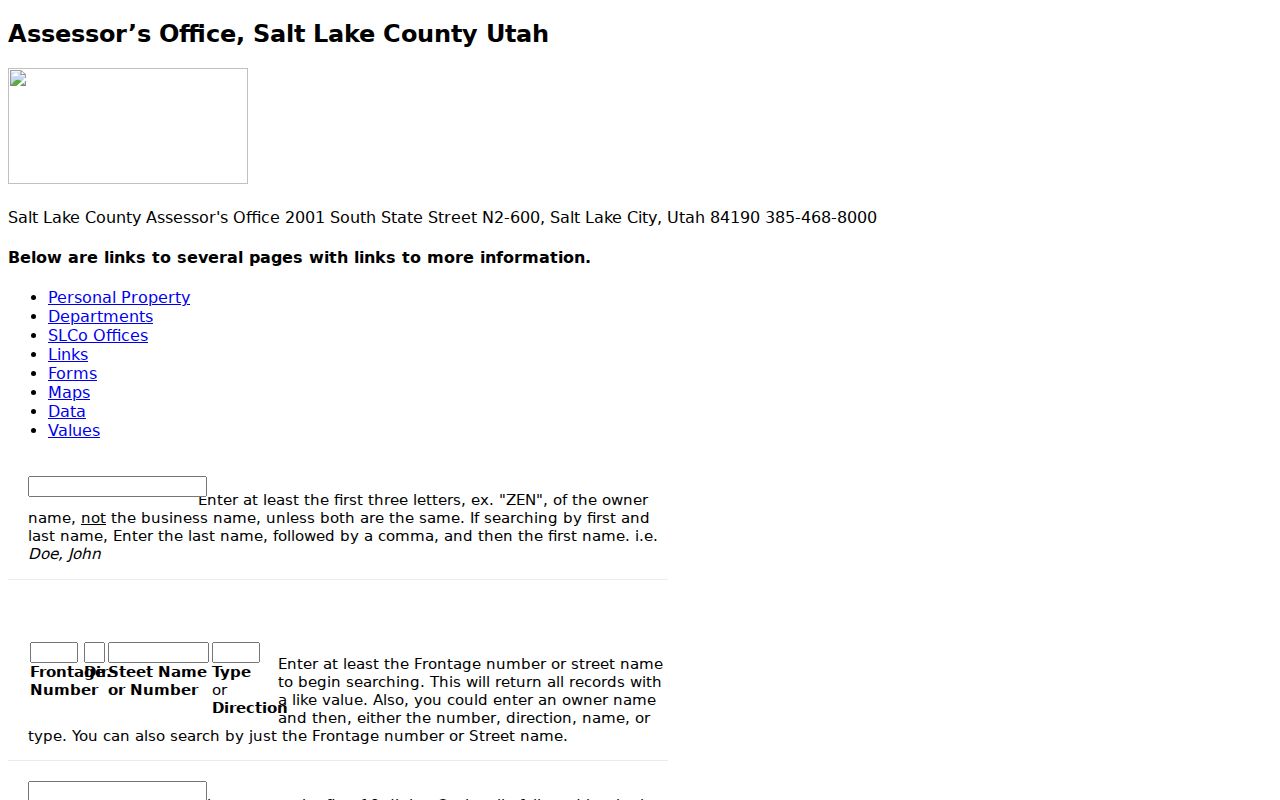
Keep the exact owner string and the parcel’s situs label separate from any conclusion about who occupies the property.
Following Midvale Deed Records
The Recorder is the title-document custodian. Its Data Services public search asks the researcher to accept terms and select an address or APN from an autocomplete list. The county warns that property information can be 24 or more hours old and does not guarantee accuracy. RecorderWorks adds searches by name, map, document number, book and page, recording date, document type, APN, and legal description.
The online person index is described as reaching from 1986 to the present, while APN deed searching is described from March 3, 1997 to the present. County archival title material reaches back to 1852 and includes older grantor and grantee indexes, abstracts, plats, and atlas material. Grantor means the party transferring an interest. Grantee means the party receiving it. A name on a deed proves participation in an instrument, not occupancy.
- Save the Assessor APN and the exact legal description.
- Search the Recorder Public Search by the selected address or APN.
- Record document number, date, type, parties, legal description, book/page, and image access.
- Use the latest grantee as the next name search, then work backward through earlier instruments.
- Move to Archives when the online index stops, and use a title professional for a formal title opinion.
The county sample result demonstrates the distinction between an index and an image. It showed an address, APN, 29 documents, document rows, current owner of record, and a legal description, while images were behind paid access. The same fields are useful for Midvale research, but a sample outside Midvale must never be presented as a local resident finding.
Current Midvale Resident Sources
No single public roster lists everyone in Midvale. A current residents directory must separate ownership, election data, court activity, civic roles, and association records. The source table below shows what each route can actually confirm. A registered voter is a person in an election file, not a complete count of people at an address. An HOA registry identifies an association, not every member household.
| Source | Who It Lists | Keeper | Access |
|---|---|---|---|
| Assessor parcel roll | Recorded owners and tax accounts | Salt Lake County Assessor | Free public search |
| Utah Voter Search | Matches in the voter file | State and county Elections | Public fields only |
| Recorder index | Deed and lien parties | Salt Lake County Recorder | Index, paid images/options |
| Civic pages | Officials and public-body contacts | Midvale and Utah Public Notice | Not a resident roster |
| HOA registry | Legal association names and contacts | Utah Commerce | Association route |
Use the Assessor when the question begins with land, the Recorder when it concerns title, and Voter Search when the question concerns an election-file match. Use civic, school, HOA, license, and business records only for the public role they describe. When a name must be verified across several record types, the Midvale resident lookup workflow keeps the dates and limits visible.
Utah Voter Records in Midvale
The Utah Voter Search form displays first name, last name, date of birth, street address, city, and ZIP fields. Its result is a match within the election system, not a citywide census. Public data may include a legal name, age or year range, residential and mailing address, precinct, districts, party or unaffiliated status, active or inactive status, last update, and vote history. Vote history records participation, not candidate choice.
Full date of birth, Social Security number, driver or state ID number, email, phone, and signature remain protected. Utah’s 2026 SB153 transition moved most formerly private or withheld voter records toward public access around May 25 and 26, while eligible At-Risk records remain withheld. Check the current Utah voter privacy information before relying on a current record.
Here is the Utah Voter Search form captured for this research.
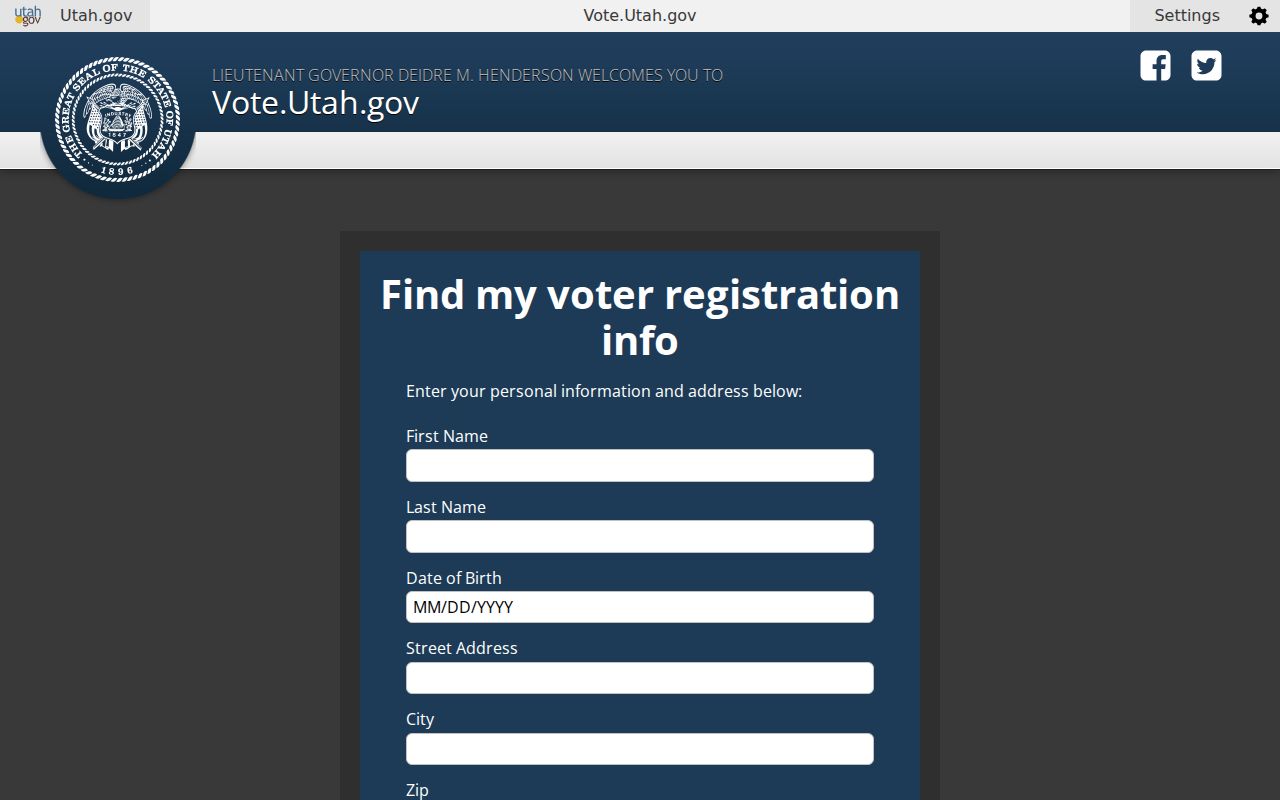
The fields show why a name, address, and file date should be kept together. Do not publish a full birth date or use a withheld address to reconstruct a protected home.
Midvale Vital Record Routes
Birth, death, marriage, and divorce records are controlled life-event records, not an open resident list. Utah Office of Vital Records and Statistics and Salt Lake County Health issue eligible birth and death copies. The county clerk issues a full marriage license from the county that issued it. The district court that granted a divorce holds the full decree, while an abstract route is narrower.
| Record | Public opening | Proper route | Key limit |
|---|---|---|---|
| Birth | After 100 years | OVRS or County Health | Earlier copies need subject or qualifying relative proof |
| Death | After 50 years | OVRS or County Health | Earlier copies use relationship and ID rules |
| Marriage or divorce abstract | After 75 years | State or county request route | 1978 to 2010 abstract form has eligibility limits |
| Full marriage license or divorce decree | Custodian rules | Issuing clerk or granting court | Not the same as a directory result |
Utah Code §26B-8-125(5) supplies the 100-year birth, 50-year death, and 75-year other-vital-record thresholds, subject to exceptions. Orders can be made online through Utah’s SILVER portal, by mail, or in person through the documented county route. Identification, proof of relationship, fees, and nonrefundable-order rules vary by record.
A certificate can verify a life event without proving every later residence. Pair a permitted copy with a cemetery, newspaper, directory, or property record, and label each source by date.
The official SILVER ordering route is shown here for Midvale research.
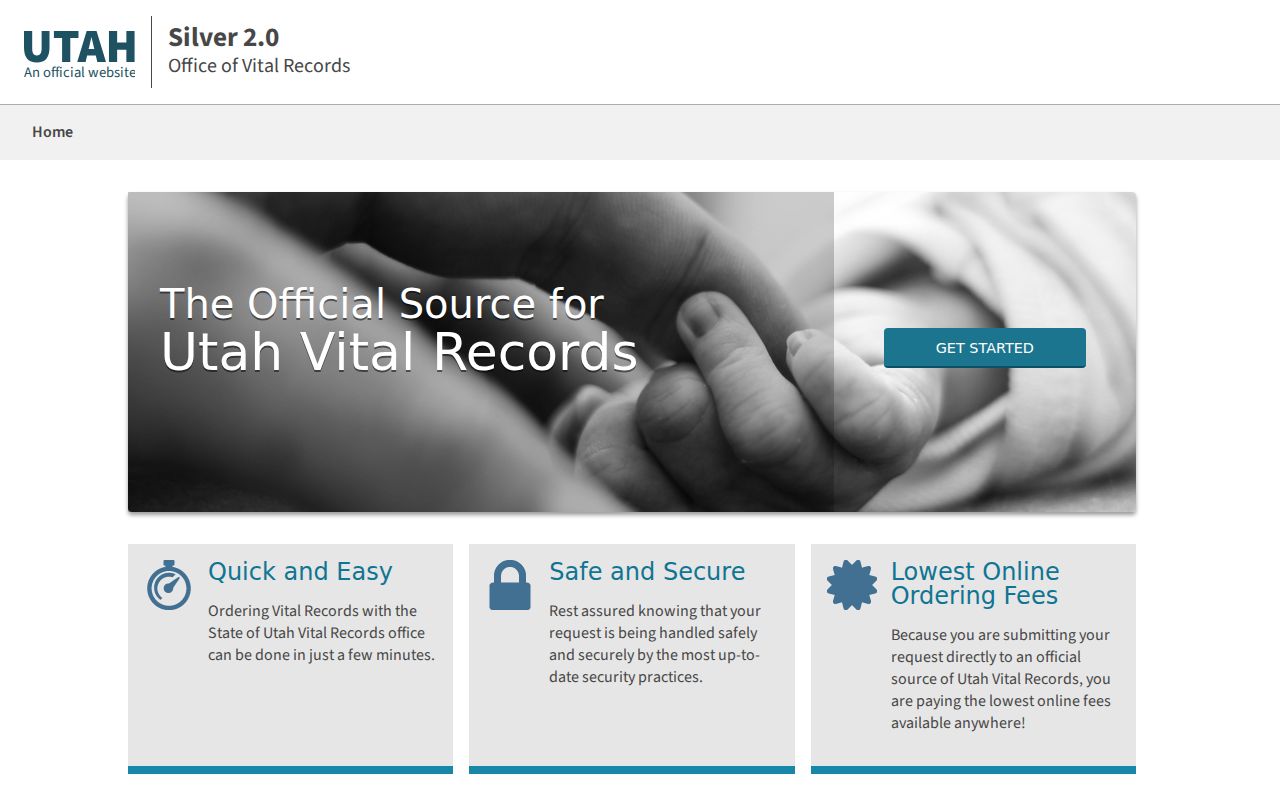
The ordering screen is a custodian gateway. It should not be described as a free searchable roster of Midvale residents.
Searching Midvale’s Recorder Index
RecorderWorks offers a deeper title trail than a parcel card. The inspected interface exposes Search by Name, Map, Document Number, Book and Page, Recording Date, Document Type, APN, and Legal Description. A date search uses From and To values. The result can show document number, recording date, instrument type, party names, and legal-description references. Images or extended access may require payment, while a $5 twenty-four-hour Data Services option is documented in the county material.
Use the exact APN and legal description from the Assessor before moving backward. Search the current grantee, find the earlier grantor, and repeat. Older Midvale material may require the Salt Lake County Archives, where permanent abstracts, grantor and grantee indexes, plats, and the Real Estate Atlas preserve records from the county’s deeper history. The title chain is a record path, not proof that every party occupied the parcel.
The RecorderWorks index makes its search modes visible in this capture.
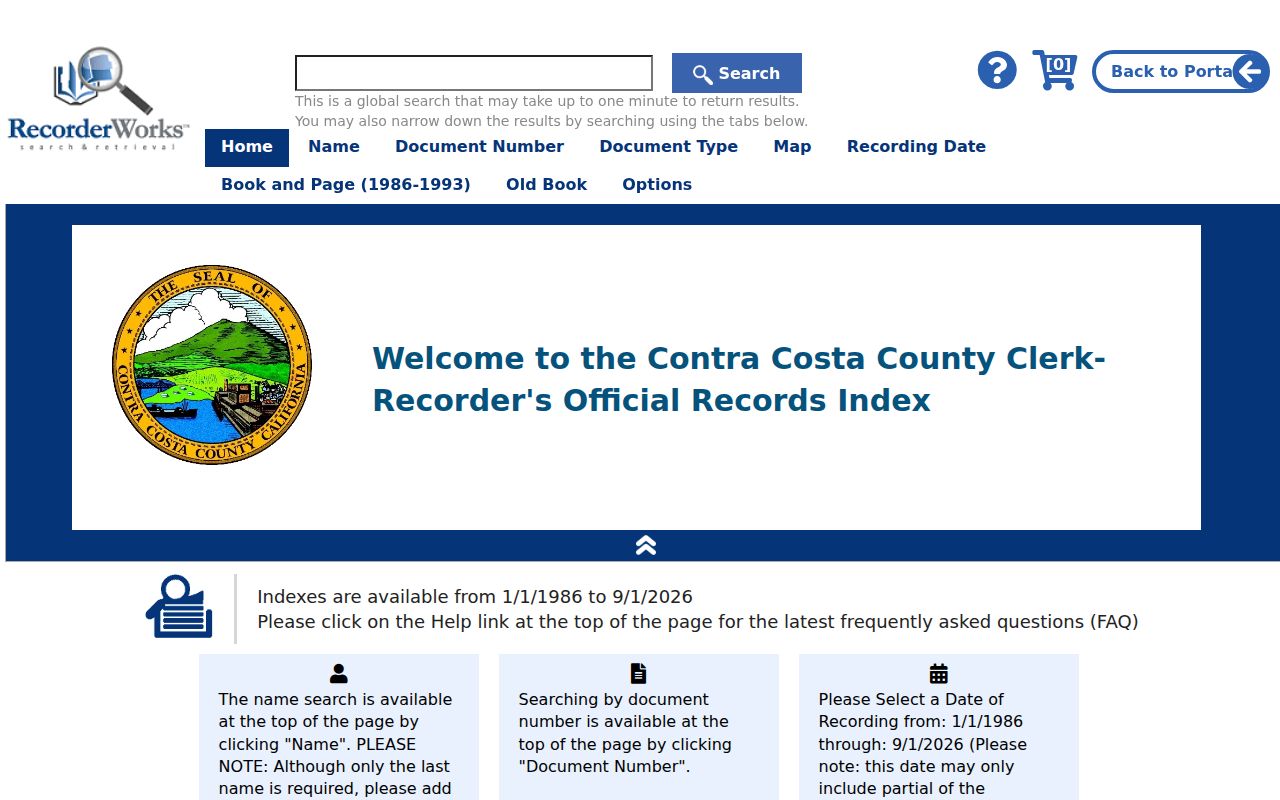
Record the search mode and date with the result. A person can be a grantor, grantee, trustee, lien party, or representative without being the resident of the property.
Midvale’s Historical Name Trail
Older Midvale records often use locality terms that no longer match a modern search box. Union Fort was established along Little Cottonwood Creek in 1853, and the general plan describes a fort with 23 homes, a school or church, and a reported population of 273 before residents returned to farms. Main Street and Bingham Junction later grew with mining, rail, hotels, churches, schools, and boarding houses. Search those labels beside Midvale when working with a newspaper or directory.
Midvale was incorporated in 1909. Union’s 1998 annexation changed the modern boundary and helps explain why an old record may say Union even though the location is now within Midvale. Keep the original locality, publication year, and legal description. Translate it only after comparing a map, plat, or parcel record.
The historical route also includes the County Archives map finding aid, which identifies the C-18.2 Midvale series, and Utah Historical Society Sanborn resources that show streets, structures, and land use. These sources add place context to a name trail without turning a map into a resident list.
Midvale ZIP and City Geography
Official Midvale addresses in the research use ZIP 84047, making it the principal postal-city signal found for the city. USPS remains the authority for an exact delivery address. A ZIP is not a city boundary, precinct, parcel, or resident count. Edge addresses need an individual lookup rather than an assumption based on a map label.
Census ZCTA 84047 reported a 2020 population of 37,146 and 17,036 residential units, while Census QuickFacts reported Midvale city’s 2020 population as 36,028. The difference shows that a ZCTA is a statistical area that does not equal the municipal line. Use USPS ZIP lookup for delivery and Census sources for aggregate context.
For a person or address question, preserve postal city, municipal city, parcel situs, precinct, and Census geography as separate fields. A ZIP match can narrow a search, but it cannot establish residence.
When Midvale Records Need GRAMA
Some city records have no public address-keyed search. Midvale’s GRAMA form asks for requester name, mailing address, daytime phone, email, a specific description, inspection or copies, signature, and date. It also includes expedited five-day and fee-waiver boxes, authority or relationship choices, and an agency classification section. The city may classify a record as public, private, protected, controlled, governed by another law, or not maintained.
Salt Lake County’s GRAMA page explains that each agency holds its own records. A written request should name the department, address or parcel, date range, and record type. The county page describes a ten-business-day response target, a five-business-day qualifying expedited route, the first 30 minutes of staff time free, then $25 per hour, and copy or media charges. Utah Code Title 63G, Chapter 2 supplies the statutory baseline.
For a Midvale question, a narrow request might ask Community Development whether a particular permit file is maintained, or ask the cemetery office for a lot card. Avoid asking for every record about a person. The custodian, classification, and record description control the result.
Midvale’s GRAMA request form shows the fields a requester must complete.
Privacy Around a Midvale Match
Public does not mean complete, current, or suitable for every use. Utah Safe at Home provides substitute addresses for eligible survivors of domestic violence, human trafficking, sexual assault, or stalking. Voter At-Risk withholding protects qualifying people. Driver records are restricted, and a plate or VIN is not a general resident-search key. Do not combine public fragments to defeat a confidentiality program.
Use the least invasive source that can answer the question. Redact full birth dates, identification numbers, signatures, protected contact fields, unit numbers, and Safe at Home addresses. If a result is private, sealed, expunged, At-Risk, or outside a portal’s current scope, say so without describing hidden content.
County property data can be more than 24 hours old, court data depends on entry into CORIS, directories have publication lag, voter records have a report date, and GIS is a map. A strong Midvale residents directory keeps the date, source, and record type beside every conclusion.
Midvale Court Name Searches
Utah Courts Xchange covers Salt Lake County district and justice court information. Search fields include jurisdiction, search type, case number, last name or company, first name, case type, search scope, birth date when available, citation number, and date ranges for filing, disposition, judgment, or satisfaction. Wildcards can help with spelling and middle-name variation, and common names should be narrowed by county, court, type, and date.
A result may show court location, case type, case number, filing date, party name, party code, case history, and a filed address when that address is public. It can also show parties, counsel, charges, pleas, dispositions, judge, proceedings, and documents. Sealed, expunged, juvenile, child-welfare, termination-of-parental-rights, and several private domestic or protective matters are excluded. A filed address is a case-era contact, not proof of current residence.
The Utah Courts Xchange portal is the official entry point for a Midvale name search.
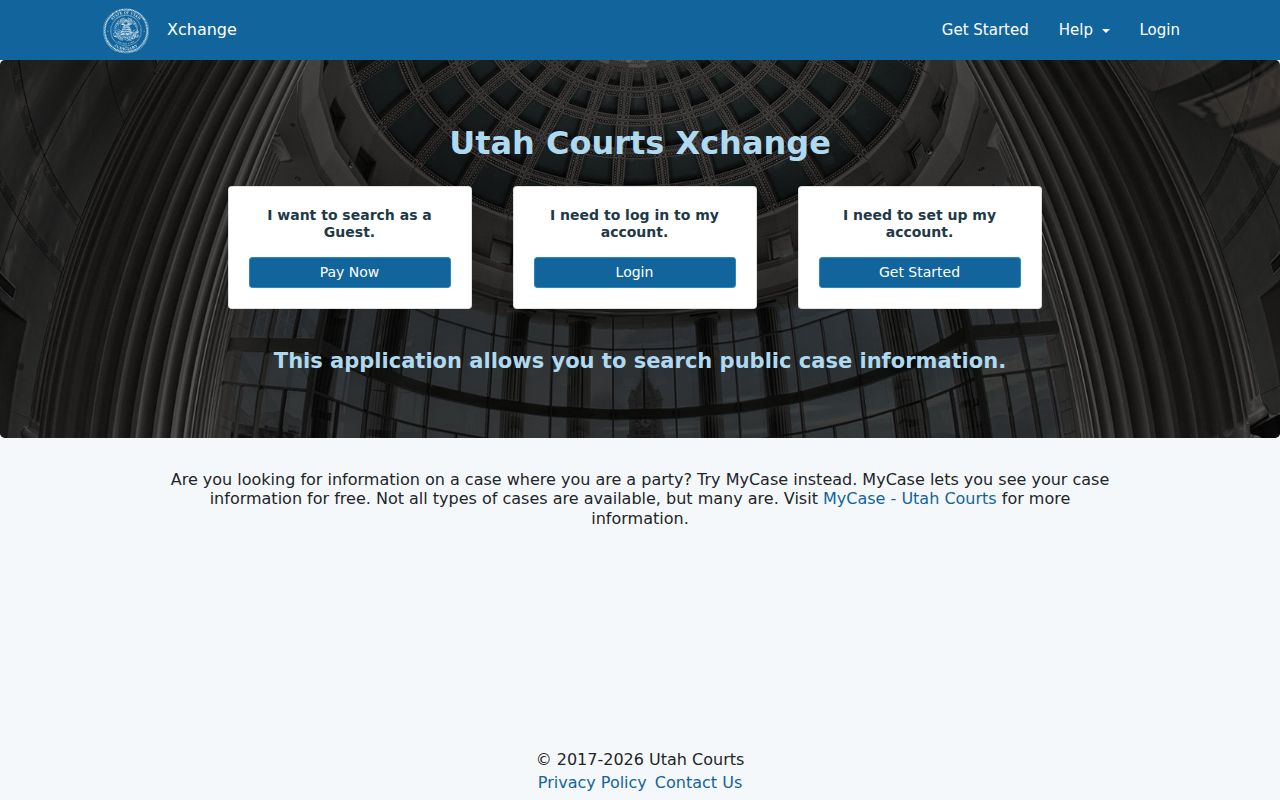
The guest and account choices show why court access and document purchase are separate from a free name lead. Federal matters, including bankruptcy, use PACER rather than Xchange.
Historical Midvale Resident Directories
University of Utah digital city directories place Midvale inside regional Salt Lake City volumes rather than always giving it a separate title. Documented leads include 1919, 1924 through 1926, 1932, and 1935. The later volumes include alphabetical, street, householders, classified business, office, map, and buyers-guide sections. FamilySearch catalogs a 1931 to 1932 telephone directory for Salt Lake City and adjoining towns, including Midvale, plus Utah gazetteer and business runs from 1900 through 1931.
The useful question is not only whether a book title contains Midvale. Search the alphabetical section, the street or householder section, nearby cross streets, and historical locality terms such as Union and Bingham Junction. The Midvale city directory collections page carries the year-by-year shelf and reading guidance. A directory date can place a name at a published address; it cannot prove continuous residence.
The 1919 pages use compact marks such as r for residence, b for boards, rms for rooms, wid for widow, constr for contractor, lab for laborer, and slsmn for salesman. Read the volume legend before turning shorthand into a conclusion.